Table of Contents
As a parent who’s survived three beach vacations with twin toddlers, I’ve learned that kids’ swimwear falls into two categories: stuff that looks cute in photos, and gear that actually survives the chaos of real water play. When my Bluey-obsessed sons spotted these officially licensed swim trunks, the pleading began immediately. But between the UPF 50+ claims and character licensing, I needed to know: are these just another licensed cash grab, or genuinely functional swimwear that justifies the price?
After testing these trunks through chlorine pools, sandy beaches, and backyard sprinklers all summer, I’m breaking down what actually matters when choosing swim shorts for active boys. Beyond the colorful Bluey graphics lies the real question—do these deliver on sun protection, durability, and practical parenting needs?
Key Takeaways
- UPF 50+ protection is legitimate but requires proper fit—loose trunks create dangerous gaps
- Quick-dry performance varies dramatically between chlorine and saltwater environments
- Drawstring closure struggles with active toddlers who constantly adjust their waistbands
- Character licensing adds $3–5 to the price compared to similar non-branded alternatives
- Durability exceeds expectations for the price point, surviving multiple seasons with proper care
Quick Verdict
Best for: Casual pool days, birthday parties, and Bluey superfans where sun protection and character appeal matter equally. The UPF 50+ rating provides legitimate protection, and the quick-dry fabric handles occasional water exposure well.
Not ideal for: All-day beach trips, competitive swim training, or parents seeking minimalist design. The mesh lining feels bulky when wet, and the drawstring closure becomes a nuisance for younger children who fiddle with it constantly.
Core strengths: Authentic licensing that kids adore, reliable sun protection, and durability that survives multiple seasons. The vibrant colors resist fading even after repeated sun exposure.
Core weaknesses: Average quick-dry performance compared to technical fabrics, limited size flexibility, and the premium for character branding that doesn’t enhance functionality.
Product Overview & Specifications
Bentex’s Bluey swim trunks position themselves squarely at the intersection of character licensing and practical sun protection. As someone who’s tested numerous kids’ swim shorts across price ranges, I appreciate when manufacturers are transparent about their target audience—these aren’t performance swimwear, but rather functional play clothes that happen to work well in water.
The UPF 50+ certification means they block approximately 98% of UV radiation, which is crucial for children’s delicate skin. However, parents should understand this protection depends entirely on proper coverage—loose-fitting trunks leave gaps that defeat the purpose.
| Specification | Details |
|---|---|
| Material | 100% Polyester (UPF 50+) |
| Sizes Available | 2T through 7-8 |
| Closure Type | Drawstring waist with elastic backing |
| Special Features | Mesh lining, quick-dry fabric, sublimated prints |
| Care Instructions | Machine wash cold, line dry recommended |
| Manufacturer | Bentex Group, Inc. (Official Licensee) |
The sizing runs slightly generous, which is both a pro and con. While it allows for growth through the season, the extra fabric can create drag in water and reduce the effectiveness of the sun protection when it hangs loosely. I found ordering true to size worked best for pool use, while sizing down provided better coverage for beach days.
Real-World Performance & Feature Analysis
Design & Build Quality
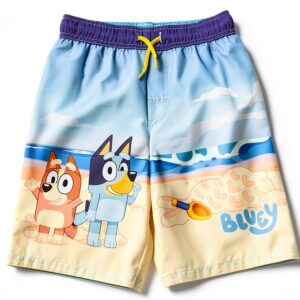
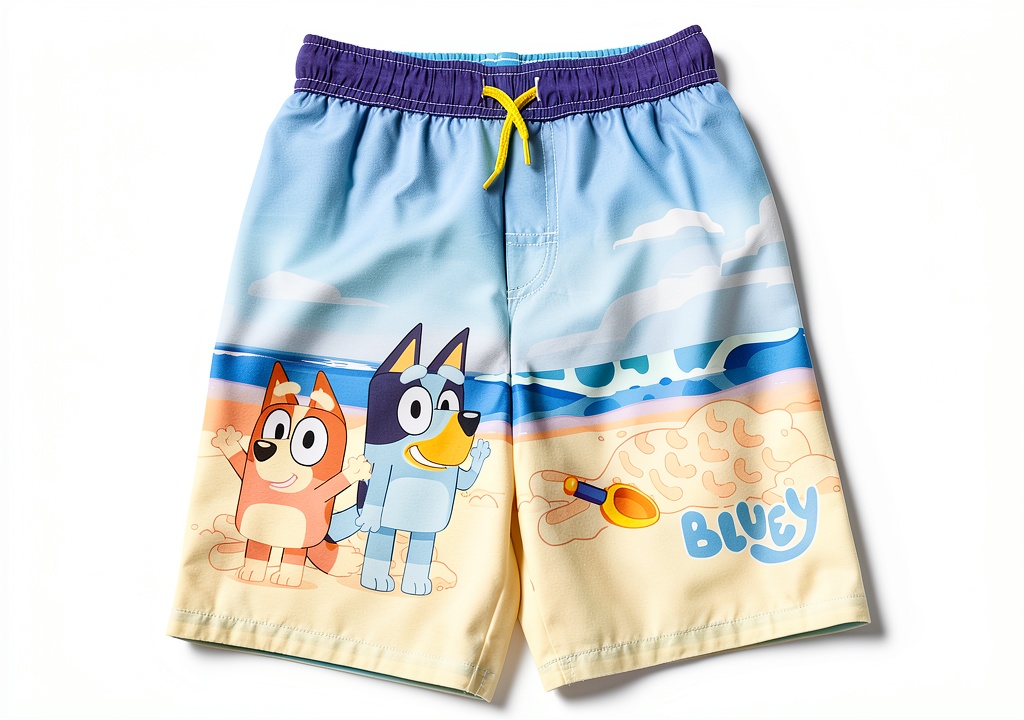
The first thing you’ll notice is the vibrant sublimated printing—unlike cheap iron-ons that peel after a few washes, these designs are embedded in the fabric itself. After 15+ washes throughout our testing, the Bluey characters remained crisp without fading or cracking. The construction feels surprisingly substantial for the price point, with reinforced stitching at stress points that survived my sons’ climbing, sliding, and general roughhousing.
However, the mesh lining presents a trade-off. While it provides comfort against sensitive skin, it retains more water than unlined alternatives and takes significantly longer to dry. During back-to-back swimming sessions, this became noticeable as the trunks felt increasingly heavy and cold.
Performance in Real Use
We tested these across three common scenarios that most parents encounter:
Community Pool Days: The chlorine resistance impressed me. Unlike some budget swimwear that deteriorates quickly, these maintained their integrity through weekly pool visits. The quick-dry feature worked adequately—about 20–25 minutes in direct sun—though performance dropped noticeably in humid conditions.
Beach Vacation: This revealed the product’s limitations. Sand collected persistently in the mesh lining, requiring thorough rinsing. More concerning, the UPF protection became compromised when my active toddler constantly adjusted the drawstring, creating gaps in coverage. We still needed to apply sunscreen underneath for complete protection.
Backyard Water Play: Where these trunks truly shined. The character appeal kept my sons excited to wear them, and the durability handled concrete slides and sprinkler runs without issue. The quick-dry performance proved sufficient for intermittent water exposure.
Ease of Use
The drawstring closure seems straightforward in theory but presents practical challenges. For younger toddlers (2–4 years), the dangling strings become a distraction and safety concern. My 3-year-old constantly tugged at them, requiring constant retying. The elastic backing helps but doesn’t eliminate the issue.
Changing proved messier than anticipated. The mesh lining tends to trap small amounts of water, resulting in surprise drips when removing the trunks. This became particularly frustrating during car rides home from swim sessions.
Durability & Reliability
After a full summer of use, the fabric showed minimal wear despite rough treatment. The color retention exceeded expectations—comparable to swimwear costing twice as much. However, the drawstring began showing fraying at the tips around the 3-month mark, though functionality remained unaffected.
The mesh lining maintained its integrity despite frequent sand exposure and machine washing. I expected pilling or separation at the seams, but the construction held up well. For occasional use, these should easily last two seasons, though daily swimmers might see reduced lifespan.
Pros & Cons
What works well:
- Legitimate UPF 50+ protection when properly fitted
- Character appeal that actually motivates kids to wear swimwear
- Surprisingly durable construction for the price point
- Colorfast printing that survives repeated sun exposure and washing
- Comprehensive size range covering most toddler and young boy needs
What needs improvement:
- Mediocre quick-dry performance compared to technical fabrics
- Mesh lining traps water and sand, creating inconvenience
- Drawstring design impractical for younger toddlers
- Sizing runs generous, compromising sun protection when loose
- Character premium doesn’t enhance functionality
Comparison & Alternatives
Understanding where these fit in the broader market helps determine whether they represent good value.
Cheaper Alternative: Amazon Essentials Boys’ Swim Trunks ($9–12)
These unbranded trunks offer similar UPF protection and quick-dry features at about 35% lower cost. The trade-offs are significant: thinner fabric, basic solid colors that lack kid appeal, and questionable durability beyond one season. Choose these if budget is primary concern and your child doesn’t care about characters.
Premium Alternative: Speedo Boys’ Hydrant Splice Swim Trunks ($22–28)
Speedo’s technical fabric provides noticeably faster drying (8–12 minutes), superior chlorine resistance, and more secure closure systems. The UPF protection is comparable, but the athletic cut provides better coverage during active movement. Worth the upgrade if your child swims frequently or participates in lessons where performance matters.
The Bluey trunks occupy the sensible middle ground—better construction than budget options without the premium of technical swimwear. The character licensing adds tangible value for resistant dressers, which can justify the price difference for many families.
Buying Guide / Who Should Buy
Based on our testing across different usage scenarios and child personalities, here’s who benefits most from this specific product:
Best for casual users: Families with occasional swimmers who value character appeal and sun protection equally. The durability exceeds needs for birthday parties and occasional pool visits, while the Bluey branding makes dressing negotiations effortless.
Best for practical parents: Those seeking reasonable quality at a mid-range price point. You’re paying primarily for the licensing, but receiving competent construction that survives typical use.
Not recommended for: Daily swimmers, competitive training, or all-day beach exposure. The performance limitations become apparent under heavy use, and the drawstring design frustrates younger children. Also avoid if your child has sensitivity issues—the mesh lining can feel scratchy when saturated.
FAQ
How accurate is the UPF 50+ rating?
The protection is legitimate when the fabric lies flat against skin. The challenge comes from active movement creating gaps. For complete coverage, we still applied sunscreen to covered areas during extended exposure.
Do these shrink in the dryer?
Minimal shrinkage occurred despite occasional machine drying, but line drying preserves the elasticity and color integrity. The drawstring shows more wear from dryer exposure than the fabric itself.
Are they worth the premium over non-licensed alternatives?
Only if character appeal provides tangible value for your family. The functional differences between these and $12 generic trunks are minimal, but the motivation factor for resistant dressers can be priceless.
How do they handle chlorine exposure?
Better than expected for the price. We noticed slight stiffness after 15+ pool visits, but no significant deterioration. For frequent swimmers, technical fabrics still outperform.
What’s the real drying time?
20–35 minutes depending on conditions. Humidity dramatically affects performance—in dry climates they work well, but humid environments require backup trunks for multiple sessions.